

Back

Blog
When Your Business Is Ready for More, But You’re Not Sure You Are
Lessons From Sorbae Frozen Treats on Taking Risks, Focusing Growth, and Building for the Future
By ICIC | September 30, 2026
Growth Before You Feel Ready
There are moments in business when an opportunity arrives before you feel prepared to take it.
Monica Ferracioli was accustomed to saying yes to whatever came her way.
A new event? Yes.
A new opportunity? Yes.
Another potential way to reach customers? Why not?
Then an opportunity came along that made Monica stop and question whether she was ready for the demands of the next stage.
She had signed on for a large event, one that felt far bigger than anything she had done before. Suddenly, she was thinking about production, logistics, timing, and whether she had the experience and capacity to pull it all off.
“I remember questioning whether I had the capacity, experience, and confidence to deliver at that level,” Monica says.
So she focused on what she could control. She prepared, asked for help when she needed it, and worked through the unknowns one at a time. The event was a success. More importantly, it showed Monica that being ready for the next stage of a business does not always mean feeling ready.

“That experience taught me that growth does not always come from feeling ready—it often comes from stepping into opportunities that stretch you.”
It is a lesson that has stayed with her as Sorbae Frozen Treats has grown.
It Started With Something Personal
In 2019, Sorbae began as a kitchen experiment.
Monica had dietary restrictions and wanted a frozen dessert that did not feel like a substitute for the real thing. She set out to recreate the creamy richness of traditional gelato using carefully selected plant-based ingredients without dairy.
Getting the texture right was not easy.
Instead of giving up, she changed the approach and froze the mixture into pops. What began as a personal challenge became a new kind of frozen treat.

Today, Sorbae Frozen Treats is a New Bedford-based frozen dessert company serving communities throughout Massachusetts and Rhode Island through mobile catering, pop-ups, and events. Its flavors draw on Monica’s Brazilian heritage and inspirations from around the world, including creamy guava, sweet corn, hibiscus, and brigadeiro, the Brazilian chocolate truffle.
Monica wanted to create something that people with dietary restrictions could enjoy, but she did not want those customers to feel like they were settling.
“I knew there were other people like me who wanted options that were both inclusive and genuinely interesting,” she says.
That idea became the foundation for Sorbae.
When More Opportunities Become Too Many
As the company developed, Monica encountered a different kind of growth challenge.
There were opportunities everywhere. The problem was that pursuing all of them at once was stretching her time and energy too thin.
“At the time, I was trying to pursue several growth strategies simultaneously,” Monica says. “While each opportunity seemed promising, dividing my attention across too many directions was consuming my time and energy without allowing me to fully develop any one of them.”
Her experience with Santander’s Cultivate Small Business (CSB) program helped her step back and look at those choices differently.
CSB provides food-based entrepreneurs with business education, coaching, mentorship, and other resources to help strengthen their businesses and prepare for growth. ICIC is the national outreach and selection partner for the program.
For Monica, one of the most valuable lessons was learning to evaluate an opportunity based on where Sorbae was headed, rather than simply whether the opportunity looked promising.
She began asking whether a particular strategy fit the company’s goals, resources, and current stage.
“The program helped me recognize that growth is not simply about doing more. It requires choosing a strategy that aligns with the company’s goals, resources, and current stage, and then committing the necessary focus to execute it well.”
For a small business owner, that can be a difficult distinction to make. When resources are limited, every new opportunity can feel like one that cannot be passed up.
Monica learned that saying no to the wrong opportunity can be just as important as saying yes to the right one.
Build the Business You Want to Grow

That focus also changed how Monica thought about what was happening behind the scenes.
In her early stage of growth, she relied on personal relationships, including her partner, Kevin, whose creative vision, hands-on support, and mentorship helped shape the brand and its visual presence, along with family members who lent a helping hand.
As Sorbae evolved and she established more structure around production, operations, pricing, event planning, and decision-making, she found that stronger systems allowed her to delegate more responsibly. This gave Monica room to think about the people and skills Sorbae would need as it grew.
For a founder who has spent years doing whatever needs to be done, that can be a significant shift.
It has also shaped Monica’s approach to leadership.
“At its core, I lead with heart,” she says. “I try to balance empathy and care for people with honesty, accountability, and what the business needs in order to move forward.”
Creating jobs has made that balance even more important. Monica wants the people who join Sorbae to feel valued while also having clear responsibilities, support, and opportunities to grow.
The goal is not simply to build a business that can sell more frozen treats. It is to build a company with the people, structure, and systems to support what comes next.
Growth Can Create Opportunities for Others
For Monica, what comes next is about more than reaching more customers.
Sorbae is expanding its mobile service with a new branded cart and exploring additional retail opportunities. Looking further ahead, Monica is exploring how Sorbae’s mobile model could eventually expand into new markets and create opportunities for other entrepreneurs.
That vision reflects something that has been present since the beginning: Monica wants the business to create room for other people.
She sees it in the customer who expects to find only one thing they can eat, only to discover that nearly the entire menu is available. She sees it when a child with dietary restrictions gets to choose from the same colorful display as everyone else. And she sees it in the family members, employees, and future entrepreneurs who can find opportunities through Sorbae.
“Change does not always have to begin on a large scale,” Monica says. “It can start by noticing what is missing within your own community and creating something thoughtful in response.”
Trust Yourself Enough to Begin
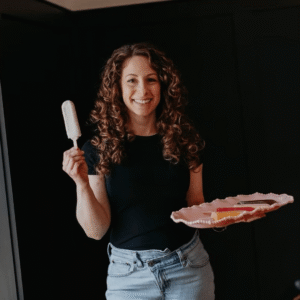
Monica’s story is not about having a perfect plan from the beginning.
It is about paying attention to what people need, being willing to try something different, learning from the moments that stretch you, and recognizing when the business needs a new approach.
Her philosophy is simple: “Trust yourself enough to begin, and allow yourself to grow along the way.”
For an entrepreneur staring at an opportunity that feels a little too big, that might mean saying yes before every detail is figured out.
For a business owner chasing too many opportunities, it might mean choosing one and giving it the attention it deserves.
And for a founder who has built a business around personal effort, it might mean creating the systems and team needed to take the company further.
You do not have to know exactly what comes next to begin building toward it.
Sometimes, you just have to trust yourself enough to take the next step.
Keep Growing With ICIC
Monica’s experience with Santander’s Cultivate Small Business is one example of how business education, coaching, mentorship, and connections can help entrepreneurs make more intentional decisions about growth.
Learn more about Santander’s Cultivate Small Business Program and explore how ICIC helps small business owners build stronger businesses, create opportunities, and strengthen their communities.